Banarasi Sarees — the ghats of Banaras on the Ganga at first light, with the gold paisley crest above.

Banarasi sarees, straight from the traditional weaver families.

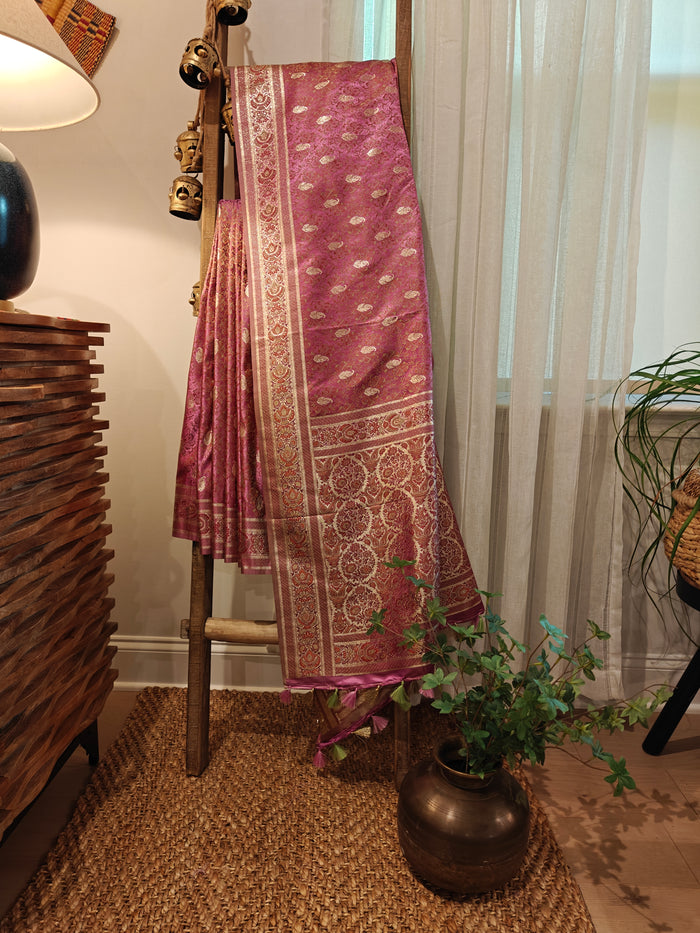
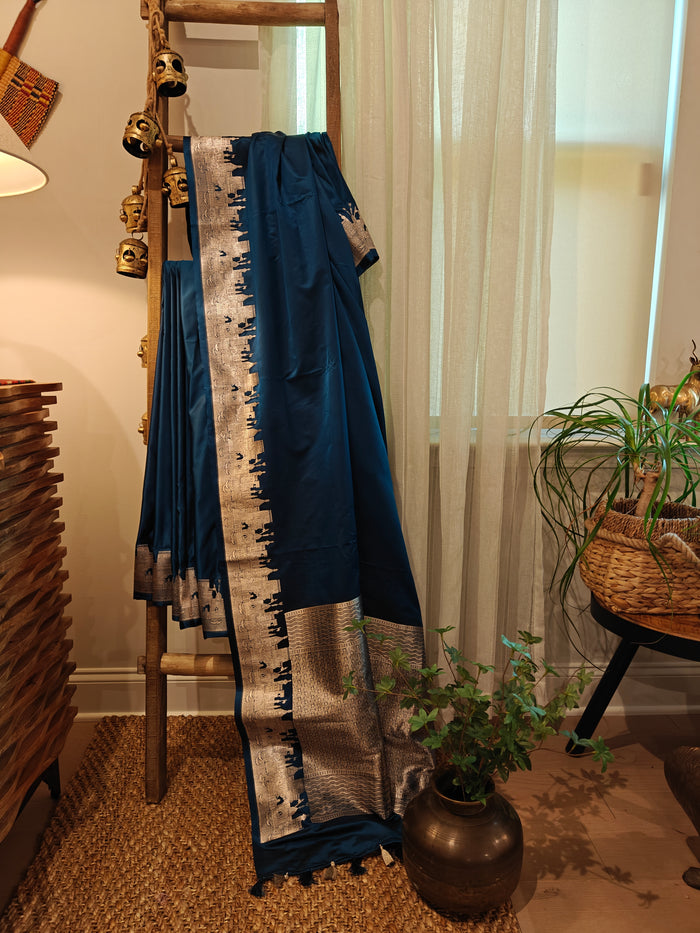
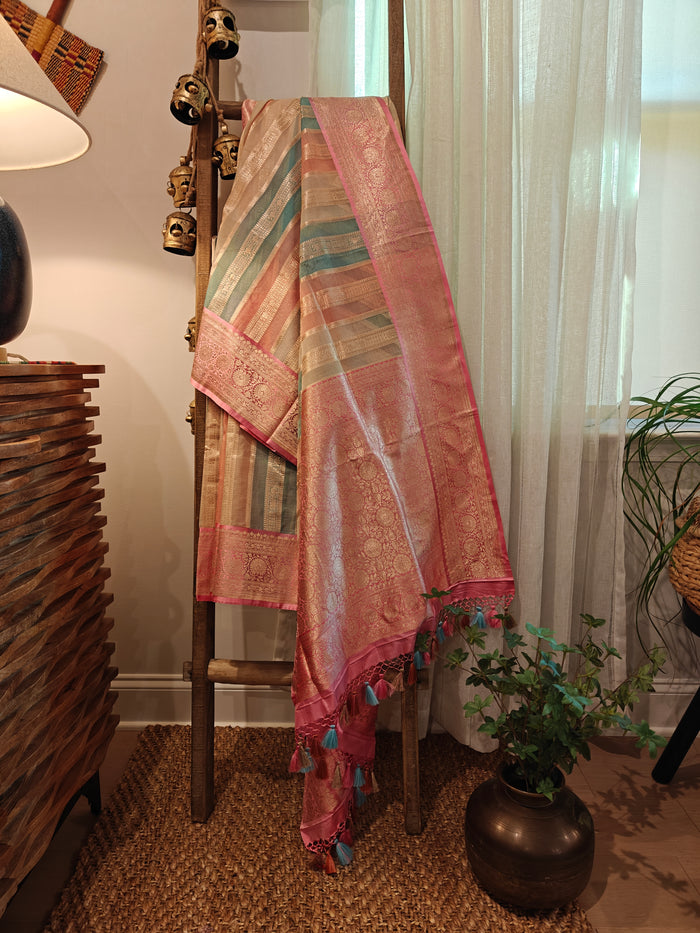
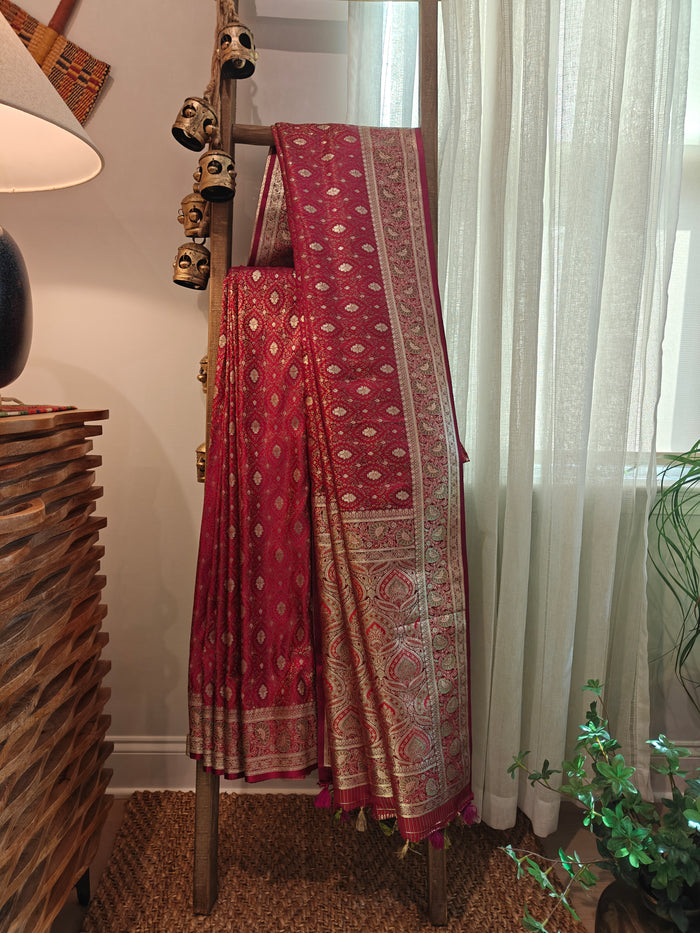
Shipped to you anywhere in the United States. The Hathkargha collection holds some of the most exclusive pieces here.

हथकरघा

Hathkargha, the handloom shelf.

A pit loom keeps alive a centuries-old weaving tradition. The silk is worked entirely by hand, the skill passed down through generations of the same family.

The Hathkargha collection is curated exclusively from weavers known by name in Banaras. Each saree takes days of painstaking work, often stretching to a month, before it becomes a prized possession.

Each saree here is unique, and once it's sold, it may not be available again.

What you are choosing between

Purchasing an exclusive Banarasi saree for a special occasion is often a nuanced decision. Among the many factors to consider, distinguishing between handloom and powerloom craftsmanship is critical, as this single distinction dramatically influences both the saree's aesthetic appeal and its value.

The collection is sourced from traditional weaving families who have been part of the Banaras trade for generations. Each saree is accompanied by a description to help make the choice easier. Handloom and powerloom sarees can look identical in a photograph, though the difference is real once the cloth is in hand.

The reverse of a handwoven saree compared with a powerloom saree On the handwoven back each motif has only short threads clipped beneath it. On the powerloom back a single thread runs continuously across the whole width behind every motif. The back of a handwoven saree The back of a powerloom saree Threads cut by hand at each motif One float carried the full width

Turn it over

On a hand-woven kadhua saree each motif is woven separately, so the reverse shows short threads clipped by hand rather than long floats running the full width of the cloth. A powerloom carries that thread straight across, every time. The back of a machine saree is tidy and identical all the way down; the back of a handwoven one is not.

Run a finger along the selvedge

Look closely at the finished edge and you should find a row of tiny pinholes, left where the warp was tied onto the loom, along with slight variation in the thickness of the edge itself. They are the fingerprints of a hand-dressed loom, and a powerloom leaves nothing like them.

Rub the zari between your fingers

Real zari is a fine metal thread — silver, usually gilded — wound around a core. Rub it and it keeps a soft shine. Imitation zari goes dull under the same treatment, or turns slightly grey, and it throws a harder, more metallic glare in the light rather than a warm one.

Weigh it in your hand

Pure silk is heavier than it looks and cool to the touch, and it warms slowly. Draped, it drops into fluid pleats. A blended saree feels lighter and slightly springy, and the pleats hold a stiffness that pure silk does not have.

Look for the small errors

A hand-thrown shuttle leaves slight variation — a motif a hair out of line, a weft packed a little tighter in one place, the odd small knot on the reverse. A machine repeats perfectly. Perfect repetition is the tell.

Know what the tags mean

Banaras brocades and sarees carry a registered Geographical Indication, which ties the name to cloth actually woven in and around Varanasi. Separately, the Silk Mark, issued by the Silk Mark Organisation of India, certifies that the yarn is pure silk. Not every genuine handloom saree travels with paperwork — a good deal of fine weaving is sold without it — but it is worth knowing what the labels mean when you do come across them.

Price follows process and material, not one over the other. A handloom saree carries the cost of a weaver's time, often weeks of it. Pure silk and real zari cost more than blends and imitation. The back of the cloth and the selvedge tell you what you need to know, which is why the reverse is photographed on every saree we list.

The names on the label, and what they mean

Banarasi isn't one weave. It's a family of techniques, and the pattern name tells you which one a saree belongs to.

The reverse of a kadhua saree, each motif finished separately
कढ़ुआ

Kadhua

Every motif is worked on its own, with no thread carried between them. Turn the cloth over and each figure sits in its own clean patch, joined to nothing beside it.

A cutwork saree, the floats cut away by hand after weaving
कटवर्क

Cutwork

The extra weft runs the full width, and the loose floats are trimmed away afterwards, leaving a soft fringe on the reverse. Lighter than kadhua, with a texture you can feel along the back.

A jangla saree, the vine covering the whole ground
जंगला

Jangla

A creeping vine that covers the entire ground of the saree rather than sitting in the border. Dense, heavy with zari, and among the busiest patterns a Banaras loom sets out.

A tanchoi saree, patterned satin with no floats on the back
तनछोई

Tanchoi

A satin ground with extra wefts built into the cloth itself, so the back carries no floats at all. The pattern reads almost as a shadow.

A shikargah saree, hunting scenes worked into the brocade
शिकारगाह

Shikargah

Hunting scenes — animals, riders, trees — worked into the brocade. The most demanding figurative weave a Banaras loom produces.

Not sure which one you want?

Tell us the occasion and how heavy you like a saree to sit, and we'll send you three we think are right, with photographs of the actual cloth.

Ask us what suits you

Who makes the Hathkargha pieces

In Banaras the loom usually sits in the house, in a pit dug into the floor so the weaver's feet can reach the treadles. The work is shared. Someone draws the design on graph paper. The naqshaband translates it into a set of tied cords that the loom can read. Two people then sit at the loom, often for months, on a single saree.

These skills move down a family rather than through a school. The weavers we buy from learned from a parent who learned from a grandparent, and the design books in some of these houses are older than anyone living in them.

A saree that takes more than a month is not slow. It is simply what the work takes.

A weaver at a pit loom in Banaras, the tied pattern cords hanging above the warp
A Banaras pit loom: the tied pattern cords overhead, the warp running back to front, and the weaver's feet on the treadles below floor level.
Six brocade saree bags in purple, gold, orange, red, green and blue, each woven with elephants, birds or a medallion in zari.
The bag your saree travels in, and stays in. Colours vary with what is on the shelf.

How your saree arrives

Most sarees reach you as a length of cloth with a job still left to do. Ours don't.

  1. The fall, already stitched

    A saree can't really be worn until a fall is stitched along its lower edge — the cotton strip that takes the wear, holds the pleats and stops the silk fraying where it drags on the floor. Normally you buy the fall separately and find a tailor. We stitch one on before the saree ships, matched to the ground colour, so it is ready to drape the day it arrives.

  2. Wrapped in muslin

    Silk does not like plastic. It needs to breathe, or the zari dulls and the ground yellows along the folds. Every saree comes wrapped in unbleached muslin — what the trade has always used, and what we would tell you to keep it in anyway. The cloth is yours to reuse.

  3. Inside a brocade saree bag

    The muslin bundle travels in a brocade bag, and that bag is where the saree should live between wearings. Keep it, and you have somewhere proper to put the saree back.

One thing worth doing once it's yours: take the saree out every few months and refold it along different lines. Silk left folded the same way for years will eventually split along the creases. Keep it out of direct sunlight, and don't leave a heavy zari saree hanging — the weight drags on the threads.

Our story

From the ghats of Banaras to your wardrobe

Childhood holidays by the river, a family wedding, and a store built so you can choose with confidence.

Read our story